
Industry Insights
Behind the pallet: what happens before clearance stock reaches a buyer?
Every pallet a reseller buys has already been through several stages before it arrives. Understanding that journey explains a lot about condition, grading and pricing.
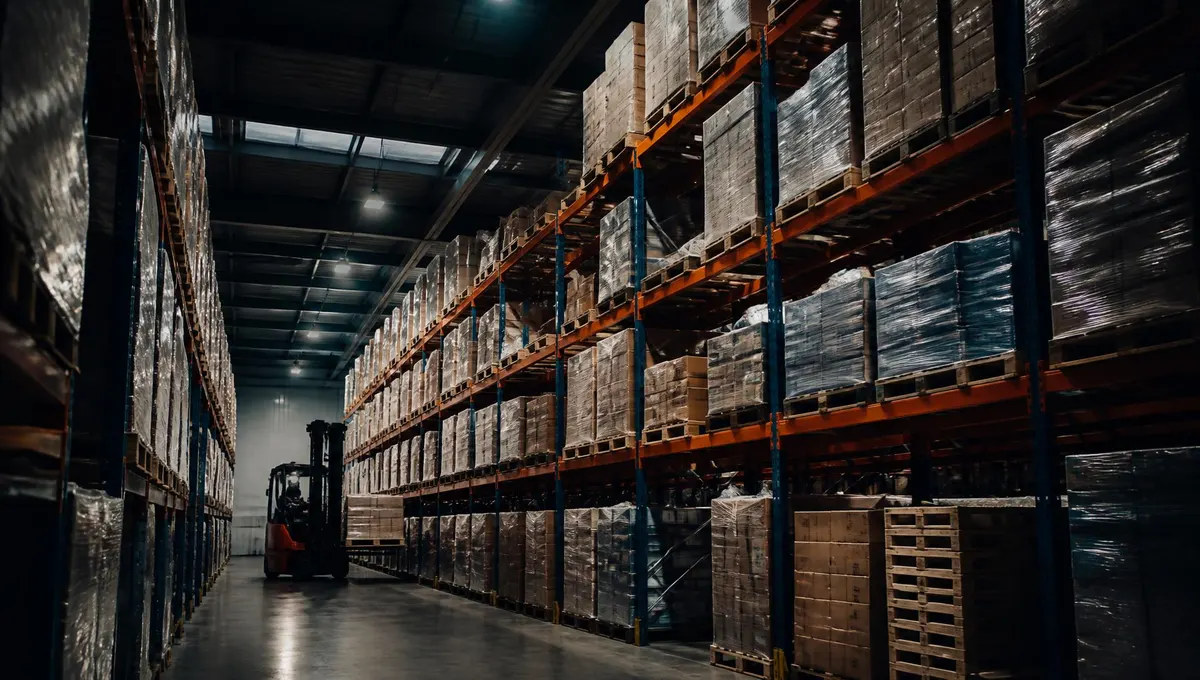
Pallets sold to resellers rarely come from a single source. They are the end point of a supply chain that starts with retailers and manufacturers managing surplus, returns and unsold stock, and ends with sorted, graded pallets ready for resale. Understanding each stage makes it easier to interpret manifests, grading and pricing.
The journey from shelf to pallet
- 1Retailer or manufacturer — stock originates from a retailer's returns desk, a manufacturer's overproduction, or a business adjusting its ranges.
- 2Returns and surplus — items are collected as customer returns, undeliverable parcel stock, end-of-line ranges, or general overstock.
- 3Sorting and grading — stock is assessed and grouped, typically into categories such as new/unopened, open box, customer return (graded A, B or C), cosmetic damage, or faulty/spares.
- 4Palletisation — sorted and graded stock is consolidated onto pallets, often by category or condition, and a manifest is produced where possible.
- 5Distribution through a platform such as Palletise — pallets are made available to registered resellers, with as much manifest and condition information provided as the source allows.
- 6Reseller — the pallet is bought, inspected, re-graded where needed, and prepared for resale.
- 7Secondary market — items reach a second consumer through marketplaces, local selling or trade buyers, often at a meaningful discount to original retail price.
Why stock ends up as surplus or returns in the first place
- Customer returns, including change-of-mind returns and items sent back under distance-selling rules.
- Undeliverable parcel stock, sometimes referred to as unclaimed parcel drop stock, where a delivery could not be completed.
- End-of-season or end-of-line ranges being cleared to make space for new stock.
- Overproduction or forecasting errors leading to unsold inventory.
- Packaging damage or minor cosmetic issues that make an item unsuitable for standard retail shelves.
Why grading terminology can vary
Because stock passes through multiple parties before reaching a reseller, grading conventions are not perfectly standardised across the industry. A grade B return from one source may be assessed slightly differently from a grade B return from another. Palletise applies clear grading definitions to the stock it distributes, but it is worth checking these definitions for any supplier you buy from, since terminology can vary.
What this means for buying decisions
Knowing where stock has come from helps set realistic expectations. Customer returns pallets will typically include a spread of conditions, from genuinely unopened items to those with clear signs of use or damage, because that reflects the reality of how customers return goods. Surplus or end-of-line stock, by contrast, is often new and unopened but may include odd sizes, colours or discontinued variants that are harder to sell at full price.
| Stock origin | Typical condition | What to expect |
|---|---|---|
| Customer returns | Mixed: unopened to used | Spread of grades, inspection essential |
| Undeliverable parcel stock | Often unopened | Usually new, but limited manifest detail |
| End-of-line/overstock | New/unopened | Good condition, but odd sizes or variants possible |
| Cosmetic damage lines | Functional, marked packaging or surface | Functionally sound, lower resale expectation |
The role of a platform like Palletise in the chain
A platform sitting between the source of stock and the reseller has two main jobs: aggregating pallets from multiple sources into a consistent, browsable offer, and applying clear grading so buyers can compare stock on a like-for-like basis. This does not remove uncertainty entirely, since grading still depends on information passed down the chain, but it does concentrate that assessment in one place rather than leaving every reseller to interpret a raw, unsorted batch themselves.
Why timing in the chain matters
Stock often moves through this chain on a schedule set by the retailer or manufacturer clearing it, not by reseller demand. This is why stock availability in a category can be uneven — a strong run of a particular product type one month does not guarantee the same the next. Understanding this helps explain why buying opportunistically, rather than assuming a specific pallet type will always be available, tends to serve resellers better over time.
What resellers can reasonably expect at each stage
- A manifest that reflects the information available at the point of palletisation, not a guarantee of every item's exact condition.
- Grading definitions that are applied consistently within a single platform, even if they differ from another supplier's terms.
- A mix of stock ages and origins on general mixed pallets, since sorting is rarely perfectly uniform.
- Clearer, more consistent detail on manifested pallets than on unmanifested or lightly manifested stock, reflecting the extra sorting involved.
A more informed buyer
Pallet resale exists because retailers and manufacturers need a route for stock that cannot be sold through normal retail channels, and resellers provide that route through to a second consumer. Seeing the full chain, from retailer to secondary market, makes it easier to read a manifest sensibly, set realistic expectations for condition, and avoid confusing a low price with automatically low value or automatically high risk.
The next time a manifest looks sparse, or a batch of returns includes a wider spread of condition than expected, it is worth remembering that this reflects the realities of the supply chain rather than a shortcut taken by any single party in it. Buyers who understand that chain tend to negotiate, inspect and price with more confidence than those working from a manifest alone.
Frequently asked questions
Does unmanifested stock mean lower quality?
Not necessarily. It usually means less information was captured earlier in the chain, which increases uncertainty rather than indicating poor condition specifically.
Why do grading terms differ between suppliers?
Grading is applied by different parties at different points in the supply chain, so conventions are not perfectly standardised across the industry. Always check a supplier's own grading definitions.
Useful next steps
Browse available stock
Pallets, job lots and full loads currently available through Palletise.
Stock alerts
Don’t miss the next stock drop
Get Palletise stock alerts, seller stories and buying guides sent to your inbox.
Stock you might be interested in
No return-pallets stock is currently available — create an account to hear about future drops.
Related reading

Buying Guides
Manifested vs unmanifested pallets: what's the difference?
Manifested and unmanifested pallets sit at different points on the risk-and-reward scale. Here's what actually separates them.

Buying Guides
Customer returns explained: Grade A, B, C and beyond
Grading terms like A, B and C are common across the industry, but they aren't standardised. Here's what to actually look for.

Supplier Advice
Why retailers and wholesalers need a route for surplus inventory
Surplus stock is a cost that grows every week it sits in a warehouse. Here's why building a repeatable clearance route matters more than clearing it once.